
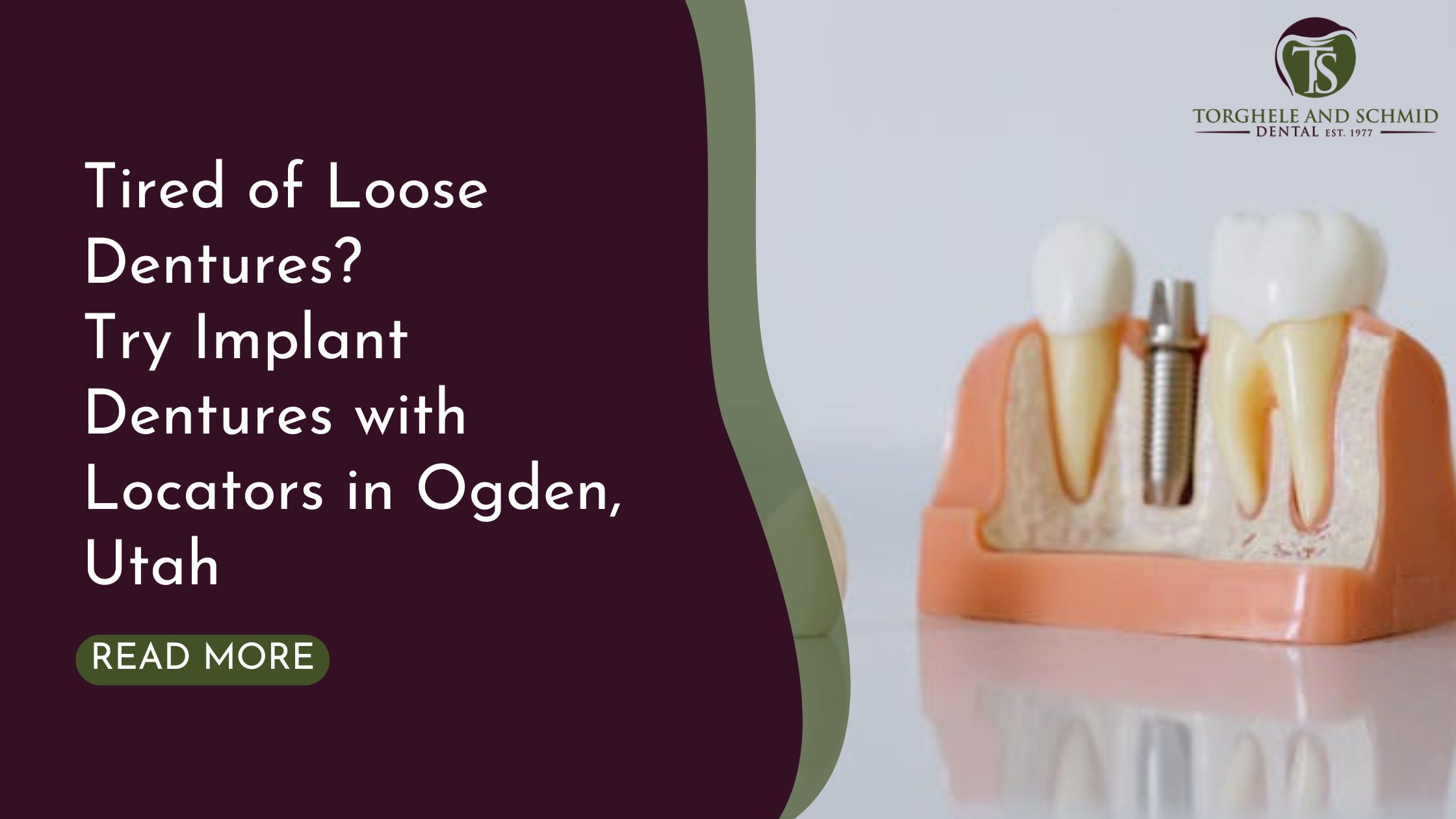
- Loose dentures often result from bone loss and gum changes over time. Implant dentures with locator attachments connect to dental implants in the jaw, helping dentures stay secure during eating, speaking, and daily activities.
- Locator dentures improve comfort and oral function by reducing movement, distributing pressure evenly, and supporting jawbone health. They also allow easier cleaning and ongoing adjustments as needs change.
- Professional evaluation and ongoing dental care play an important role in long-term success. With proper planning, maintenance, and follow-up, implant dentures with locators support comfort, stability, and improved quality of life for patients in Ogden.
Traditional dentures rest on the gums. Bone loss over time causes changes in fit. Denture adhesives help for short periods. Slipping often returns. Implant dentures with locators attach to dental implants placed in the jaw. These attachments help dentures stay in place during daily use. This approach supports oral function and long-term stability.
Understanding how locator dentures work helps patients make informed choices. This article explains the process, benefits, and care needs. It also discusses who may benefit most. Readers can explore why many patients now move away from traditional removable dentures.
Understanding Denture Stability Issues
Loose dentures create daily frustration for many adults. Changes in jaw shape play a major role. Bone loss starts soon after tooth loss. Gums shrink over time. Dentures that once fit well may begin to move.
Poor fit affects chewing strength. Patients may avoid certain foods. Speech clarity may suffer. Denture movement also irritates gum tissue. Sore spots often develop. These issues increase over time without professional care.
Adhesives offer limited support. They require frequent reapplication. Many patients dislike taste and texture. Adhesives do not stop bone loss. They only mask symptoms for short periods.
Dental evaluations help identify the source of denture instability. Imaging and exams reveal bone levels and tissue health. These findings guide treatment planning and long-term solutions.
What Are Implant Dentures with Locators?
Implant dentures with locators combine implants with removable dentures. Dental implants anchor into the jawbone. Locator attachments connect implants to the denture base. These attachments lock the denture into position.
The denture remains removable for cleaning. The locator system uses low-profile connectors. These connectors allow easy insertion and removal. Patients experience improved stability during eating and speaking.
Locator attachments include nylon inserts. These inserts control retention strength. Dentists can adjust retention levels over time. This flexibility supports comfort and long-term use.
Implant placement supports jawbone health. Bone receives stimulation through chewing forces. This stimulation slows bone loss. Traditional dentures cannot provide this benefit.
How Locator Attachments Improve Comfort
Comfort matters for denture wearers. Locator systems reduce movement during daily activities. Dentures stay seated during meals. Speech sounds remain clear.
Pressure is distributed more evenly across the jaw. This reduces sore spots. Gum irritation decreases. Many patients report improved confidence in public settings.
The low-profile design helps patients with limited space. Some systems require more vertical height. Locator attachments fit well in many cases. This feature allows broader eligibility.
Dentists adjust locator inserts as needs change. Stronger or lighter retention options support patient comfort. This adaptability helps maintain fitness over time.
The Dental Implant Process Explained
Implant treatment involves several steps. Each stage focuses on accuracy and comfort. The process begins with evaluation and planning.
Initial Consultation and Imaging
The dental team reviews oral health history. Imaging shows bone structure and implant placement areas. This information supports precise planning.
Dentists assess gum health and existing dentures. Some patients require preparatory care. Cleanings or minor treatments may occur first.
Implant Placement Procedure
Dental implants consist of titanium posts. The dentist places them into the jawbone. The procedure occurs under local anesthesia. Sedation options help patients who feel anxious.
Healing follows implant placement. Bone bonds with the implant surface. This process takes several months. Healing supports long-term stability.
Locator Attachment Placement
After healing, locator abutments attach to the implants. Dentures receive corresponding components. The dental team adjusts fit and retention. Patients receive instructions for insertion and removal. Follow-up visits fine-tune comfort and function.
Who May Benefit from Locator Implant Dentures
Many patients qualify for implant dentures with locators. Adequate bone supports implant placement. Some patients require bone grafting before treatment.
Adults who struggle with loose dentures often explore this option. Patients who avoid implants due to fear may find locator systems manageable. The removable design offers familiarity.
People with gag reflex issues often prefer stable dentures. Locator systems reduce movement that triggers discomfort. Medical history plays a role. Conditions such as diabetes require careful planning. Dental teams coordinate care to support healing.
Comparing Traditional Dentures and Locator Dentures
Understanding differences helps guide decisions.
- Traditional dentures rely on suction and gum support. Locator dentures use implant anchorage. This distinction affects daily function.
- Chewing efficiency improves with implant support. Patients enjoy a wider food range. Denture movement decreases significantly.
- Speech clarity improves with stable dentures. Words sound more natural. Social confidence often increases.
- Jawbone preservation remains another difference. Implant stimulation slows bone loss. Traditional dentures cannot offer this benefit.
Maintenance routines also differ. Locator dentures require regular insert replacement. Traditional dentures often need relining due to fit changes.
Oral Health Benefits Beyond Stability
Implant dentures support oral health in multiple ways. Stable dentures reduce gum irritation. Tissue health improves with even pressure distribution.
Bone support helps maintain facial structure. Sunken facial appearance often improves. Jaw alignment remains more stable.
Improved chewing supports digestion. Patients chew food more thoroughly. This supports overall wellness. Better denture fit reduces infection risk. Bacteria accumulate less under stable dentures. Regular professional care supports long-term health.
Daily Care for Implant Dentures with Locators
Proper care supports longevity and comfort. Daily routines remain simple. Patients remove dentures for cleaning. Gentle brushing removes debris. Non-abrasive cleaners protect denture surfaces.
Implants and locator attachments require cleaning. Soft brushes and recommended tools help maintain hygiene. Nighttime removal allows tissue rest. Dentists provide guidance based on individual needs.
Regular dental visits monitor attachment wear. Locator inserts require periodic replacement. This maintenance supports consistent retention.
Addressing Common Concerns About Implant Dentures
Many patients ask questions before choosing this option. Cost concerns arise frequently. Implant dentures involve an initial investment. Long-term benefits often outweigh repeated adjustments with traditional dentures.
Surgical fear affects decision-making. Modern techniques support comfort. Sedation options help manage anxiety.
Healing time concerns patients. Each case varies. Dental teams provide clear timelines and expectations. Maintenance questions also arise. Locator systems require simple upkeep. Professional support helps patients adapt smoothly.
The Role of Professional Dental Evaluation
Professional assessment guides safe treatment. Dentists evaluate bone levels and tissue health. Imaging supports accurate planning. Patient history informs care decisions. Medications and medical conditions matter. Dental teams tailor plans to individual needs.
Education remains part of care. Patients learn about options and expectations. Informed decisions lead to better outcomes. Follow-up visits track healing and function. Adjustments support long-term comfort.
Lifestyle Changes After Switching to Locator Dentures
Daily life often improves after treatment. Patients enjoy meals without worry. Foods once avoided return to the diet. Speech confidence improves in social settings. Dentures stay secure during conversations.
Physical comfort increases. Sore spots become less common. Jaw fatigue decreases. Patients often report improved self-image. Smiles feel natural. Social interactions feel relaxed.
Long-Term Outlook for Implant Dentures
Implant dentures offer durable support. Implants integrate with bone over time. This stability supports long-term use. Locator attachments require maintenance. Insert replacement occurs periodically. This process remains straightforward.
Regular dental visits support success. Professional cleanings and exams monitor health. Patients who follow care instructions experience lasting benefits. Stable dentures support daily comfort and function.
Why Patients in Ogden Explore This Option
Ogden residents value comfort and function. Active lifestyles require dependable dental solutions. Locator dentures support daily activities.
Access to comprehensive dental care supports this option. Modern technology allows precise planning and placement.
Patient education helps guide decisions. Understanding benefits encourages exploration of implant support. Dental teams in Ogden focus on long-term oral health. Treatment plans address individual needs and goals.
Commitment to Ongoing Dental Care
Successful outcomes depend on continued care. Routine visits monitor implants and attachments. Professional cleanings support tissue health. Dental teams provide guidance on home routines. Adjustments occur as needs change.
Preventive care remains important. Early detection supports long-term stability. Patients who stay engaged with care plans enjoy lasting comfort.
Why Choose Torghele and Schmid Dental
Torghele and Schmid Dental provides comprehensive dental services for patients in Ogden. The team offers thorough evaluations and personalized care plans. Modern diagnostic tools support precise implant planning.
Patient comfort remains a priority. Clear explanations guide each step. Ongoing support helps patients adapt to implant dentures with locators. The practice focuses on long-term oral stability and function. Treatment approaches reflect individual needs and goals. Patients receive attentive care throughout the process.
Protect your gums and support a confident smile with care from Torghele and Schmid Dental in Ogden. Schedule an appointment today for a personalized evaluation and long-term oral health support.

MEET OUR OGDEN DENTAL TEAM!
Torghele Dentistry is a family-owned dental office conveniently located in Ogden, UT. We offer a broad range of dental services, from top-notch preventive care to advanced dental implants. Come see why we've been such an important part of the community for the past four decades!